Changer la langue en
Université de Genève

Section of Pharmaceutical Sciences Institute of Pharmaceutical Sciences of Western Switzerland

Institut des Sciences Pharmaceutiques de Suisse Occidentale (ISPSO)

Research groups

Access unit websites

Biomedical and metabolomic analysis

Biomedical and metabolomic analysis

Serge Rudaz

Biomedical and metabolomic analysis

Serge Rudaz
Analytical sciences
Computational methods and data analysis
Toxicology
Global Pharmacy
Metabolomics
Biopharmaceutical Medicines

The group is developing new strategies for untargeted metabolomic analyses. It specializes in the analysis of low molecular weight compounds in biological matrices. Since 2010, it has also been developing chemometric approaches dedicated to the analysis of data from MS couplings, including capillary electrophoresis. Aspects of dimensionality reduction and multi-table analysis are addressed through numerous collaborative projects (toxicology, biology, biochemistry, pharmacology).

View the unit
Biomolecular & Pharmaceutical Modelling

Biomolecular & Pharmaceutical Modelling

Francesco Luigi Gervasio

Biomolecular & Pharmaceutical Modelling

Francesco Luigi Gervasio
Molecular Dynamics
Cryptic Pockets
GPCRs
Computational Biophysics

The biomolecular and pharmaceutical modeling group, led by Prof. Francesco Luigi Gervasio, focuses on developing methods for biomolecular simulations and computer-aided drug discovery, with an emphasis on enahnced sampling algorithms, as well as multi-scale and coarse-grained models.

The group has made crucial contributions to the development of methods for overcoming the timescale problem (metadynamics, parallel-tempering metadynamics, path collective variables, OneOPES), which are widely used in various fields ranging from nanotechnology to biophysics.

The group has also developed computational methods to predict the location of hidden (cryptic) allosteric pockets in targets of pharmaceutical interest (SWISH, SWISH-X, CryptoBank). Such cavities could enable the development of drugs for targets considered "unreachable" by classical approaches.

A further research focus of the group is the understanding of allosteric regulation and large-scale protein dynamics in receptors such as GPCRs and kinases. To this end, advanced simulation and free energy methods are often combined with structural and dynamic experiments with both local and international partners.

View the unit
Biopharmacy

Biopharmacy

Gerrit Borchard

Biopharmacy

Gerrit Borchard
Nanomedicines
Biopharmaceutical Medicines

L'interaction entre un médicament, sa formulation et l'environnement biologique auquel il est exposé est déterminante pour son profil pharmacocinétique, son efficacité et sa sécurité. Notre groupe étudie l'interaction des systèmes d'administration de médicaments et de vaccins à l'échelle nanométrique avec leurs tissus ciblés en utilisant des méthodes de caractérisation physico-chimique, des essais cellulaires et des modèles précliniques. Nous nous engageons également dans l'optimisation des propriétés de ces vecteurs afin d'optimiser leur efficacité dans la prévention et le traitement des maladies infectieuses et du cancer.

View the unit
Biophysical and Bioanalytical Mass Spectrometry

Biophysical and Bioanalytical Mass Spectrometry

Valerie Gabelica

Biophysical and Bioanalytical Mass Spectrometry

Valerie Gabelica
Analytical sciences
Drug Discovery
Computational methods and data analysis
Spectrométrie de masse

Our research addresses a fundamental question: how does molecular information survive—and transform—when a biomolecule moves from solution into the mass spectrometer, and how to exploit this information? We combine mass spectrometry, ion mobility, ion spectroscopy, controlled activation and quantitative modelling to understand this transfer and turn it into useful molecular information.

We apply these approaches to nucleic acids and their interactions with proteins, ligands and therapeutic molecules, with particular interest in structure, energetics, thermodynamics and kinetics. At the same time, we develop new ways to interpret ion signals, collision cross sections and fragmentation as physical observables rather than empirical fingerprints.

Our ambition is to make mass spectrometry a quantitative tool for molecular biophysics.

View the unit
Cancer Systems Pharmacology

Cancer Systems Pharmacology

Patrycja Nowak-Sliwinska

Cancer Systems Pharmacology

Patrycja Nowak-Sliwinska
Drug Discovery
Computational methods and data analysis
Precision pharmacy
Systems Pharmacology Applied to Cancer

L'objectif général de la recherche du groupe de Pharmacologie des Systèmes Appliquée au Cancer est l'identification de stratégies thérapeutiques optimisées pour le traitement de maladies complexes, principalement le cancer. Notre stratégie d'optimisation utilise la recherche fondamentale pour révéler les mécanismes d'action des mélanges de médicaments optimisés. Ces derniers, à leur tour, peuvent identifier de nouvelles voies de signalisation, des mécanismes de résistance et peuvent conduire à de nouvelles voies de découverte de médicaments.

View the unit
Clinical Pharmacology and Toxicology

Clinical Pharmacology and Toxicology

Caroline Flora Samer

Clinical Pharmacology and Toxicology

Caroline Flora Samer
Clinical pharmacology
Toxicology
Pharmacogenomics
Precision medicine

The research work of the Clinical Pharmacology and Toxicology group strives to personalize and secure drug therapy (personalized or precision medicine approach) by measuring gene-environment-disease interactions at the pharmacokinetic level (drug interactions, in-vitro / in-vivo / in-silico prediction) and exploiting advances in various -omics technologies, including pharmacogenomics.

They revolve around 3 main themes:

a) Development and optimization of tools and models for pharmacological and toxicological applications: in vitro models for assessing drug metabolism and transport (hepatic microsomes, 3D cell models), physiology-based pharmacokinetic prediction and simulation models (PBPK) of drug-genetic-disease interactions, in-vivo tools for the characterization of metabolism and drug transport (phenotyping cocktail).

b) Research of "omic" biomarkers of sensitivity and exposure to xenobiotics. The therapeutic substances studied (Phase I and IV clinical trials) are in particular opioid analgesics and paracetamol as well as thienopyridines antiaggregants.

c) Tools for computerized decision support and securing prescription with the help of information science technologies (linguistic analysis of data).

Collaborations are active with numerous research groups and clinical services (Faculty Center of translational investigation in biomarkers, oncopediatrics, internal medicine, hemostasis, anesthesiology, medical information sciences in particular) and at the interfaculty level with the pharmaceutical sciences.

View the unit
Clinical Pharmacy Sciences

Clinical Pharmacy Sciences

Chantal Csajka

Clinical Pharmacy Sciences

Chantal Csajka
Drug dosage individualization
Drug efficacy and safety Optimisation
Tools and Guidelines for the clinic

The Clinical Pharmacy Sciences Group develops innovative strategies to optimize drug dosage regimens using population pharmacometrics approaches, with a particular focus on high-risk drugs and vulnerable populations. Its research aims to reduce interindividual variability in drug response and improve the benefit–risk balance of medicines in real-world clinical practice. Another area of interest is to promote the effective and safe use of medicines after marketing authorization. This is achieved through cutting-edge research, the development of clinical digital tools and evidence-based recommendations, and the integration of technological innovations, including AI-driven methodologies for drug safety assessment and adverse drug events monitoring, aligned with evolving healthcare needs. Priority research areas include:

• Securing prescribing practices and pharmaceutical care in vulnerable populations

• Therapeutic individualization within personalized medicine, by improving the understanding of clinical, environmental, and genetic determinants of variability in drug response to minimize suboptimal efficacy and prevent toxicity

• Integration of AI-driven technologies for the monitoring, prediction, and prevention of adverse drug reactions

For more information on our group and the clinical pharmaceutical sciences network, visit the CRISP (https://www.chuv.ch/fr/crisp/), #CapsuleInnovation.

View the unit
Clinical community pharmacy

Clinical community pharmacy

Jérôme Berger

Clinical community pharmacy

Jérôme Berger
Community pharmacy
Pharmacy services
Medication optimization
Collaborative primary care

Unisanté's Pharmacy is a unique structure in Switzerland due to its integration within a university center and its combined clinical and academic activities, making it the only community pharmacy with such a foundation.

Research
Unisanté's Pharmacy works to "develop methods for community pharmacy practice, test them and evaluate their impact through research, and then teach them to pharmacy students and practitioners," in line with the 1993 mission of the “Vaud University Center for Education and Research in Community Pharmacy,” which led to its creation. This initiative was supported by the Vaud Society of Pharmacy, the University Outpatient Medical Clinic (now Unisanté), the CHUV, the University of Lausanne, and pharmaSuisse.

Its two main research focuses are:

Clinical
Unisanté's Pharmacy plays a vital role at the heart of the hospital community in the care of populations with clinical and/or biopsychosocial complexity. Nearly 9,500 patients are followed and collect specific treatments that require particular pharmaceutical expertise to ensure their responsible use.

(Video showcasing some clinical activities)

View the unit
Data Analytics Lab

Data Analytics Lab

Stephane Guerrier

Data Analytics Lab

Stephane Guerrier
Biostatistics
Data Analytics in Pharmaceutical Sciences
Data Science
Statistical Modelling
Machine Learning
Efficient Design Study
View the unit
Drug Formulation and Delivery Unit

Drug Formulation and Delivery Unit

Davide Brambilla

Drug Formulation and Delivery Unit

Davide Brambilla
Drug Delivery
Pharmaceutical Technology
Biomaterials
Nanotechnology
Microtechnology
Portable diagnostic

Our laboratory works at the intersection of medicine, pharmacy, and materials science with the overarching goals of improving drug efficacy and patient compliance while developing minimally invasive diagnostic devices. Our research focuses on the design of biomaterials for drug‑delivery applications, including advanced oral formulations, long‑acting injectable systems, nanoparticles for the delivery of genetic material, and microneedles for the non‑invasive administration of diagnostic and therapeutic agents. We increasingly integrate computational methods to optimize formulation design, analyze complex datasets, and accelerate the development of innovative delivery platforms. Among other projects, our group is also a pioneer in the development of fluorescent medical tattoos designed for non‑invasive, wearable monitoring of pathological parameters.

View the unit
Hospital Pharmacy

Hospital Pharmacy

Pascal Bonnabry

Hospital Pharmacy

Pascal Bonnabry
Medication safety
Human factors & technologies
Hospital production
Continuity of care
Innovative teaching
Pharmacoeconomics
  • Optimize the safety, efficiency, and traceability of medication use in hospitals by addressing the 3Ps:
    • Processes: risk analysis, information technology, human factors, ergonomics and efficiency, continuity of care
    • People: interprofessional collaboration, therapeutic education, decision support, innovative teaching methods
    • Products: clinical and economic optimization of use, development of hospital preparations, 3D printing, toxic product analysis
View the unit
Medical Imaging

Medical Imaging

Norbert Lange

Medical Imaging

Norbert Lange
Heme biosynthesis
Artificial antibodies
Photodynamic Therapy and Photodiagnosis
Self-assembling nanoparticles
Prodrug design

Our mission is to provide new formulations for specific and targeted imaging, diagnosis and treatment of lesions. Specifically, our research aims at developing submicroscopic biocompatible systems, such as supramolecular constructs, micelles, liposomes, nanoparticles. Depending on the intended application they are decorated with targeting entities such as peptides or antibodies. A specificity of our activity is not only to formulate submicroscopic constructs, but also to imagine and conceive complex modalities enabling their activation by external sources of energy, such as light, ultrasound, or magnetic fields. In particular, research is conducted in fluorescent contrast agents, ultrasound reporters, photodynamic therapy, and magnetic resonance imaging for molecular imaging. This is mostly done in close collaboration with partners with biological and clinical background.

These projects generally require the in-house de novo preparation of original organic molecules followed their formulation. Our tasks also encompass in vitro biological evaluations as well as in vivo studies. Our expertise also covers the solid, semi-solid and liquid forms, which enables us to train pharmacy students on all aspects of pharmaceutical technology and to offer services to external partners

View the unit
Medication Adherence and Interprofessionality

Medication Adherence and Interprofessionality

Marie Paule Schneider Voirol

Medication Adherence and Interprofessionality

Marie Paule Schneider Voirol
Medication adherence
Interprofessionality
Communication in health
Patient partnership

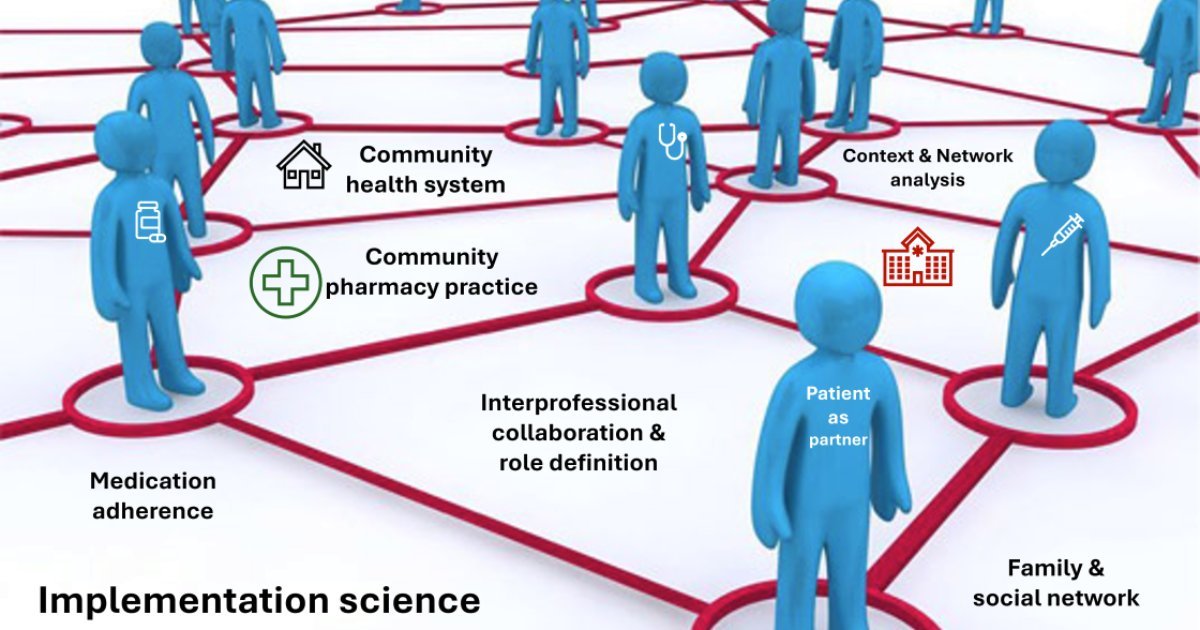
L’adhésion médicamenteuse est un facteur déterminant des systèmes de santé ambulatoires. Elle est définie comme le processus par lequel les patients prennent leurs médicaments tels que prescrits.

Elle repose sur la prise de décision partagée, l'éducation et le partenariat patient. Selon l'Organisation Mondiale de la Santé (OMS, 2003), 40 à 50 % des patients chroniques dans le monde n’adhèrent pas ou partiellement à leur traitement médicamenteux.

Cette situation représente une menace médicale et économique majeure pour les systèmes de santé. La recherche est nécessaire pour mieux documenter ce problème endémique et ses facteurs contributifs, ainsi que pour développer et évaluer, à l’aide des sciences de l’implémentation, des programmes interprofessionnels coût-efficaces de soutien à l’adhésion en pratique clinique, et envisager de nouveaux modèles de soins.

View the unit
Microbiology Unit

Microbiology Unit

Karl Perron

Microbiology Unit

Karl Perron
Antibiotic resistance
Bacterial virulence
Pseudomonas aeruginosa
Antimicrobial molecules
Microbiological analyses

Le groupe se concentre principalement sur la résistance aux antibiotiques chez la bactérie Pseudomonas aeruginosa, en particulier sur les mécanismes induits en présence de certains métaux. Nous explorons également les infections sous l’angle de l’interaction hôte-pathogène, en nous intéressant aux processus moléculaires impliqués.

Par ailleurs, le laboratoire propose divers services d’expertise et d’analyses microbiologiques à la communauté. Nos recherches portent sur l’identification de nouvelles molécules antimicrobiennes ainsi que sur le développement d’alternatives innovantes pour lutter contre les infections, telles que la phagothérapie ou la conception de matériaux aux propriétés antimicrobiennes (https://www.unige.ch/sciences/perronlab/index.php/en)

View the unit
Molecular therapeutics delivery group

Molecular therapeutics delivery group

Yogeshvar Kalia

Molecular therapeutics delivery group

Yogeshvar Kalia
Drug Discovery
Drug Formulation
Ex vivo models

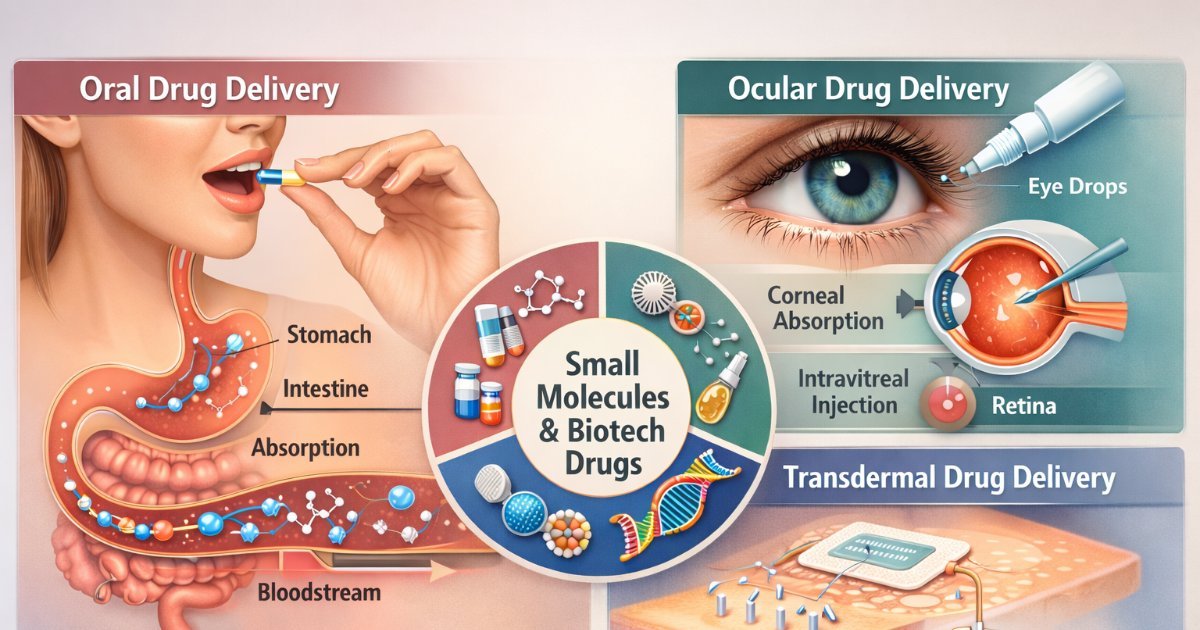
Nos recherches se concentrent sur les approches utilisant les prodrogues et le développement de stratégies de formulation (par ex, les micelles) et de technologies (par ex, l'iontophorèse ou le laser ablatif fractionnée) pour améliorer l'administration de médicaments dans et à travers les membranes biologiques.

Nous travaillons avec des petites molécules, des peptides et des protéines (y compris les anticorps monoclonaux). Notre principal domaine d'intérêt a été l'administration cutanée et transdermique, mais ces dernières années, nous avons appliqué notre expertise à d'autres voies d'administration de médicaments. Des projets en cours portent sur l'administration de médicaments par voie buccale et oculaire (intracornéenne/transsclérale) et sur le développement de modèles d'absorption intestinale.

Outre l'amélioration de la biodisponibilité des médicaments, nous essayons de comprendre la biodistribution des médicaments dans le tissu cible, tant sur le plan quantitatif qu'au moyen de techniques d'imagerie de pointe.

View the unit
Pharmaceutical Analysis

Pharmaceutical Analysis

Davy Guillarme

Pharmaceutical Analysis

Davy Guillarme
Analytical strategies
Next-generation therapeutics
Liquid chromatography
Pharmaceutical industry

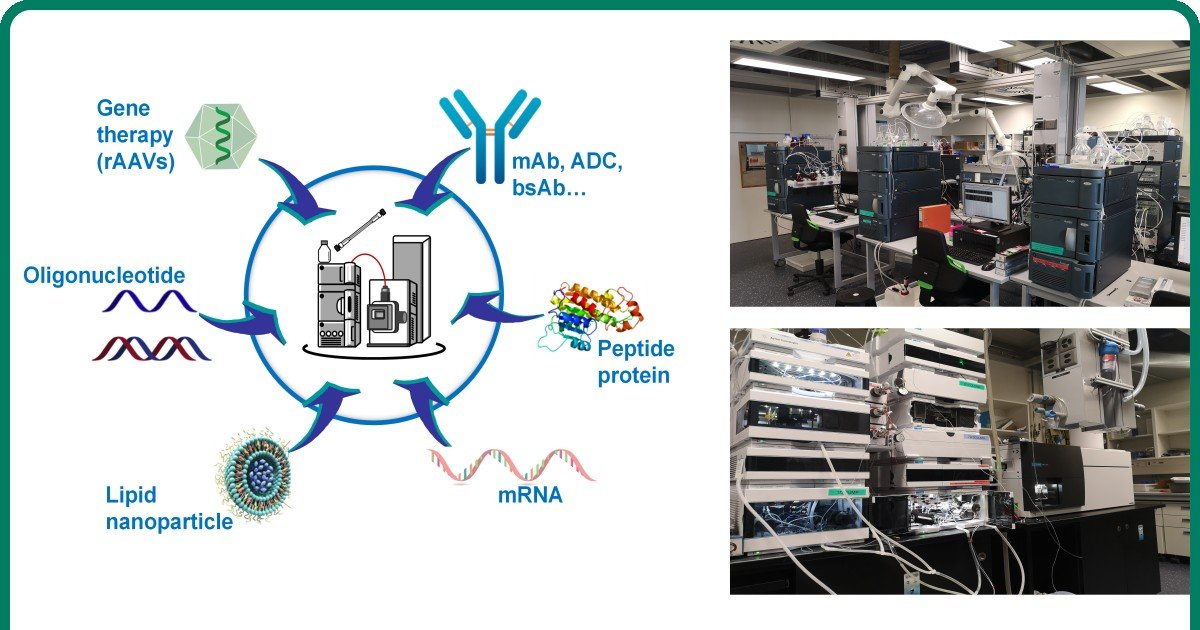
In our laboratory, we are developing innovative chromatographic strategies, based on various modes of liquid chromatography (RPLC, HILIC, SEC, IEX, HIC, IP-RPLC, Affinity-LC…), SFC, and 2D-LC, coupled or not with mass spectrometry. Our goal is to enhance throughput, automatization, selectivity, sensitivity, and peak capacity. These advanced chromatographic methods are applied to the characterization of next-generation therapeutics, including monoclonal antibodies (mAbs), oligonucleotides, peptides, proteins, mRNA, recombinant adeno-associated viruses (rAAVs), and lipid nanoparticles. We collaborate extensively with pharmaceutical companies to gain access to demanding samples that serve as benchmarks for our methodologies, as well as with instrumentation providers to gain access to cutting-edge systems and chromatographic columns for our research.

View the unit
Pharmaceutical Biochemistry

Pharmaceutical Biochemistry

Leonardo Scapozza

Pharmaceutical Biochemistry

Leonardo Scapozza
Drug Discovery
Computational methods and data analysis
Precision pharmacy

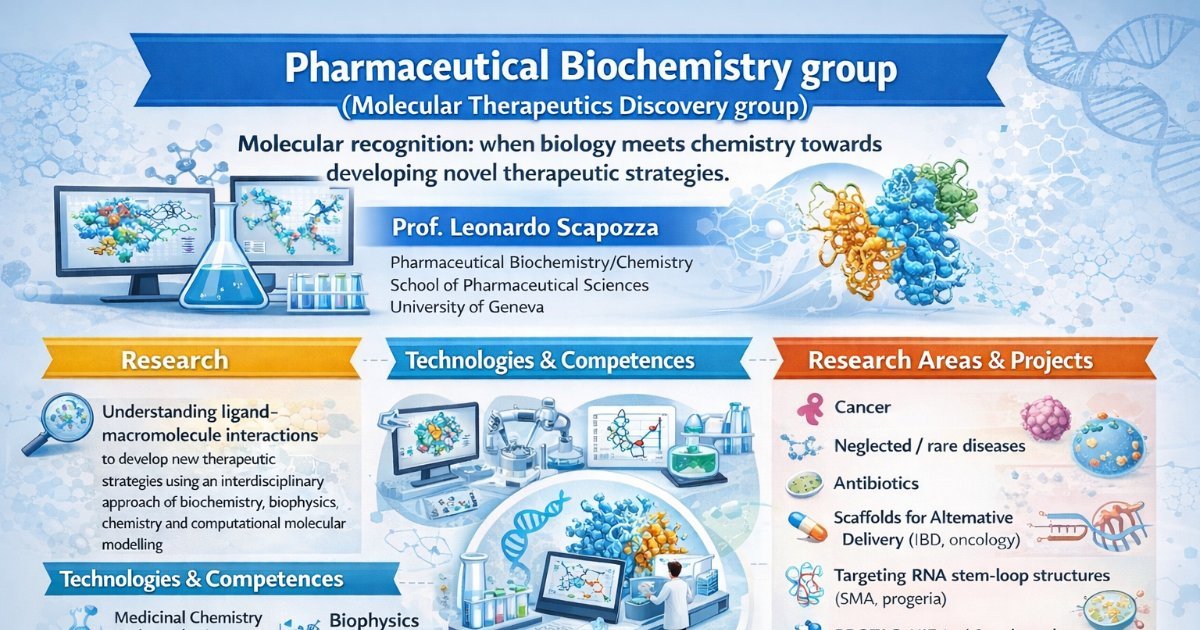
Our research focuses on molecular recognition for a better understanding of ligand-macromolecule interactions in order to develop new therapeutic strategies including new chemical entities and new targets, using an interdisciplinary approach based on the combination of biochemistry/biophysics and chemistry with computational chemistry/molecular modelling.

View the unit
Pharmacognosy

Pharmacognosy

Muriel Cuendet

Pharmacognosy

Muriel Cuendet
Drug Discovery
3D cell models
Microenvironment

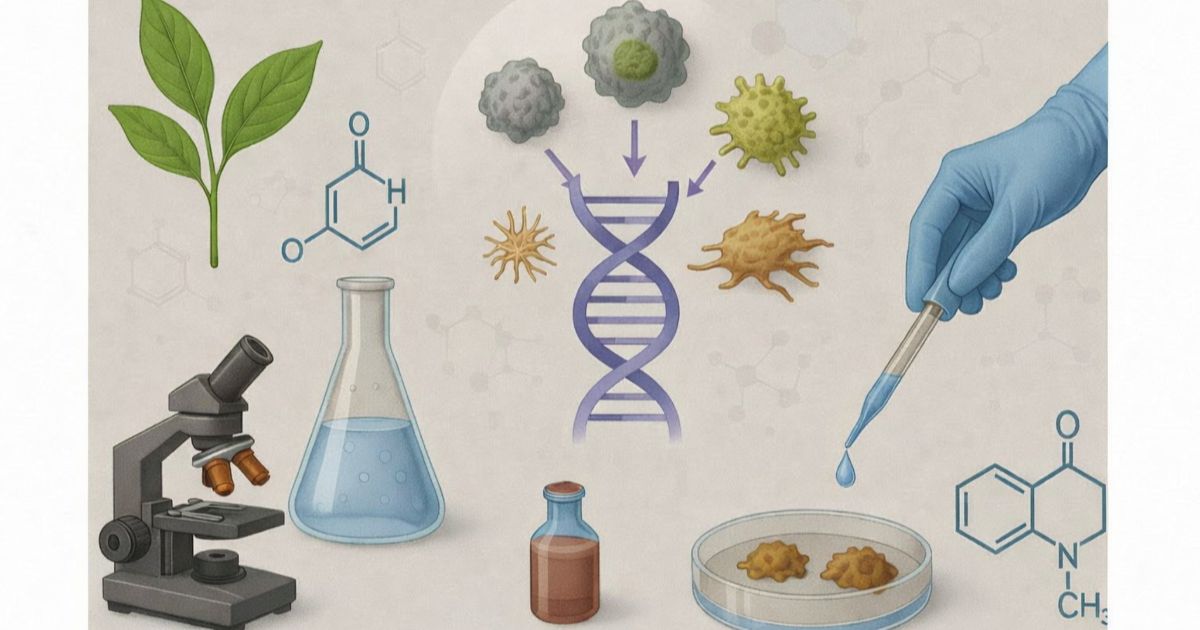
La découverte et la caractérisation de nouveaux agents anticancéreux à partir de diverses sources naturelles et synthétiques est un thème central de notre groupe.

Des tests in vitro indicatifs des principales caractéristiques du cancer telles que la prolifération cellulaire, l’inflammation, l’angiogenèse, la migration et l’invasion permettent d’identifier de potentiels composés anticancéreux. Ensuite, des études mécanistiques détaillées sont effectuées sur les composés les plus actifs. Un intérêt particulier se porte sur des modèles de myélome multiple et de cancer du poumon. Un autre domaine de recherche est la recherche de composés actifs naturels contre les maladies parasitaires tropicales.

View the unit
Phytochemistry & Bioactive Natural Products

Phytochemistry & Bioactive Natural Products

Jean-Luc Wolfender

Phytochemistry & Bioactive Natural Products

Jean-Luc Wolfender
Analytical sciences
Drug Discovery
Computational methods and data analysis
Natural products
Metabolomics
Structural identification

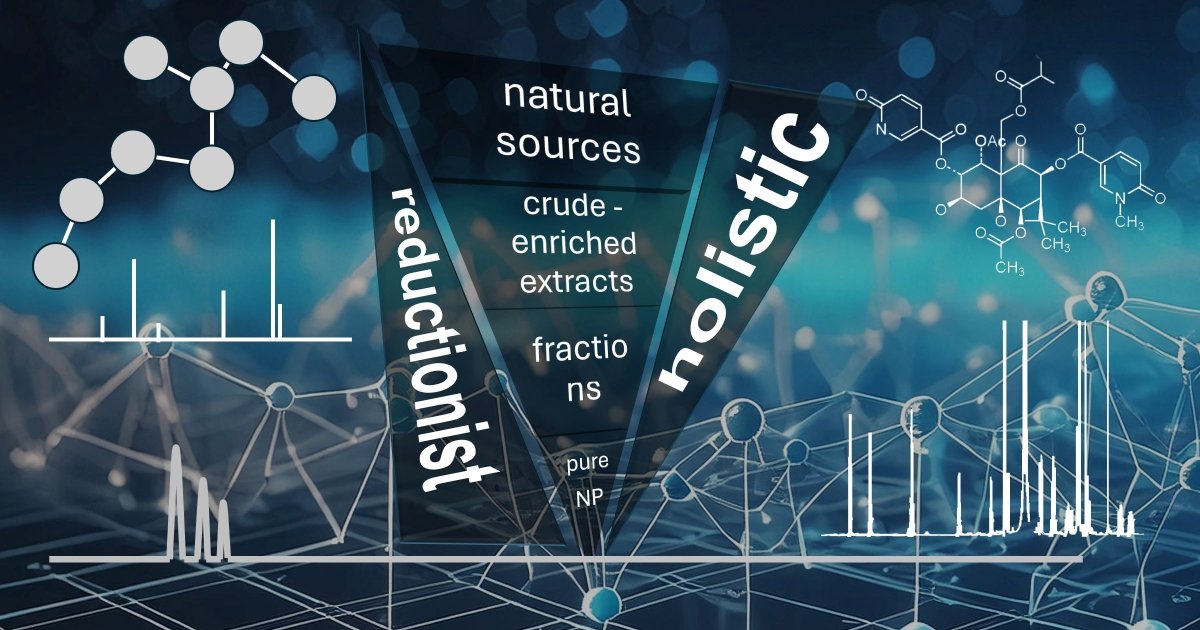
La recherche de produits naturels (PNs) bioactifs se fait classiquement par isolement bioguidé à partir de grandes quantités de matériel végétal.

Pour rationaliser et accélérer ce processus, notre groupe développe des stratégies de micro-fractionnement LC-MS novatrices pour le profilage des activités biologiques et l'identification des PNs à l'échelle du microgramme en combinaison avec l'analyse métabolomique (RMN/MS) des extraits. Nous adaptons cette approche à des tests d'activité en plaque micropuits in vitro et in vivo (modèle zebrafish) en partenariat. Afin de découvrir des PNs originaux nous étudions en particulier ceux qui sont induits dynamiquement dans des plantes et des organismes soumis à des stress biotiques et abiotiques d'un point de vue fondamental et appliqué, notamment pour la recherche de nouveaux antifongiques.

View the unit
Specialised Centre for Emergency and Disaster Pharmacy

Specialised Centre for Emergency and Disaster Pharmacy

Pascal Bonnabry

Specialised Centre for Emergency and Disaster Pharmacy

Pascal Bonnabry
Global Pharmacy

The Specialised Centre for Emergency and Disaster Pharmacy, funded by the Swiss Confederation, aims to provide a Swiss platform for education, research and interchange in this field.

It was established in 2017 by the Centre of Competence for Military and Disaster Medicine, following the recommendations of a working group created by pharmaSuisse.

View the unit